
Robert Feezer Company (RFC)
Custom Service Management & Workflow Optimization Platform - 2025
BUSINESS GOALS
Robert Feezer Company (RFC), an established plumbing and service provider, approached OPG with the need to modernize their internal operations. The RFC legacy software had been used for years to manage customer information, create work orders, and track services conducted for properties across Maryland. As business expanded, however, leveraging this system became a slower process, with difficult navigation and increasing costs. RFC sought a streamlined digital solution to manage customer data and work order history more effectively, without disrupting the manual, paper-based field workflow that their technicians rely on for daily success.
PROJECT GOALS
The primary objectives for the RFC platform build included:
Replace a cumbersome legacy system with a modern, high-speed interface that allows for rapid customer creation and ticket management.
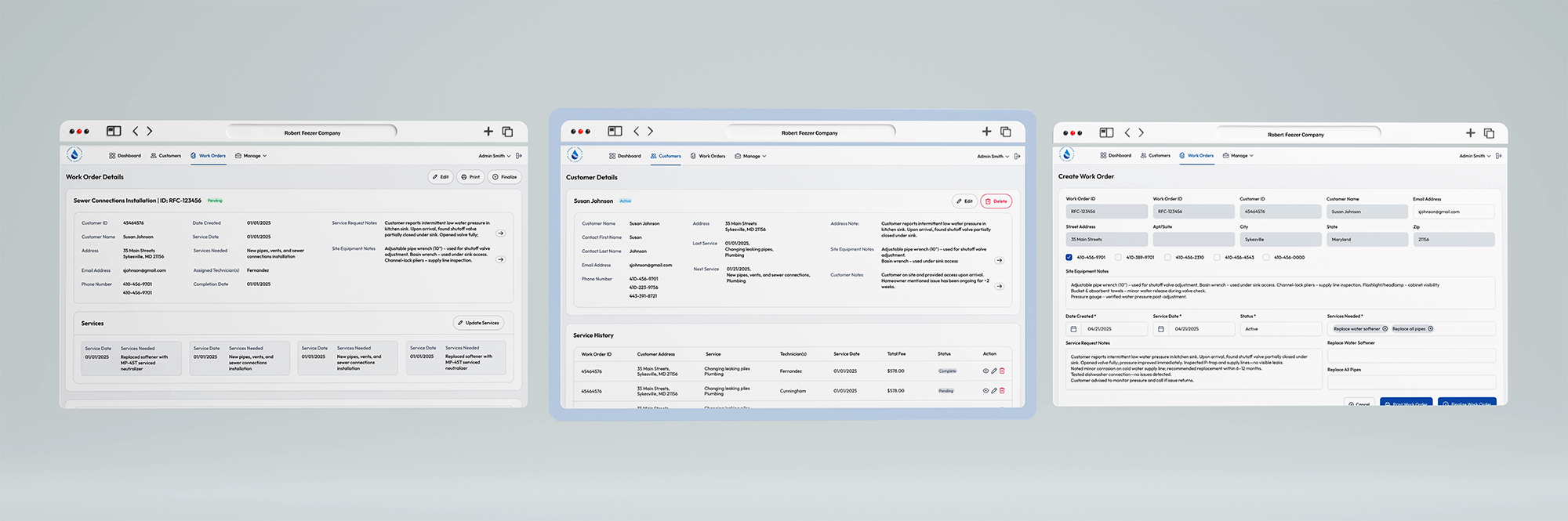
Develop a “Work Order History” feature that automatically compiles previous service data onto new work orders, providing technicians with vital context before they begin a job.
Create a digital-to-analog bridge where digital tickets are printed for field use and later updated with handwritten notes to maintain a permanent, searchable record.
Prioritize a “clean-desk” design philosophy that eliminates visual clutter, making the system intuitive for the core administrative team.
OUR SOLUTION
OPG developed a customer and work order management platform tailored to the specific rhythmic needs of a high-volume service business:
OPG’s design team focused on a clear, “efficiency-first” interface. By mapping out the staff's daily click-path, OPG reduced the number of steps required to create a ticket. A logical and easy to follow information hierarchy ensures that even during the busiest morning hours, data entry is fast and error-free.
OPG built a robust database in which each customer was distinguishable and was attributed a clear and easy to manage service history. RFC’s extensive historical data was then mapped and migrated to the new system where intuitive frontend components made that information organized and accessible.
UI/UX isn't just for the screen; OPG designed the printed work order templates to be highly functional. The layout provides clear sections for handwritten field notes and timestamps, ensuring that when paper returns to the office, the transcription process is seamless.
To support RFC’s unique administrative workflow, OPG designed a “Closeout” dashboard. This allows office staff to efficiently transcribe field notes back into the system, ensuring that the services conducted on-site are accurate and readily available.
Data entry is a delicate process, and sometimes historical context is needed to enter the necessary information correctly. For this reason, OPG implemented auto-save logic so that the RFC administrative team could begin creating a service ticket for a customer, then switch over to the customer’s service history without losing progress.
KEY ACHIEVEMENTS
Successfully transitioned the team from an outdated interface to a modern web-based UI that rewards speed and accuracy.
Streamlined administrative and technician performance through the automated inclusion of historical service data on logically designed field work orders.
Eliminated unnecessary software overhead and licensing fees by focusing strictly on the features that drive value for the RFC team.